
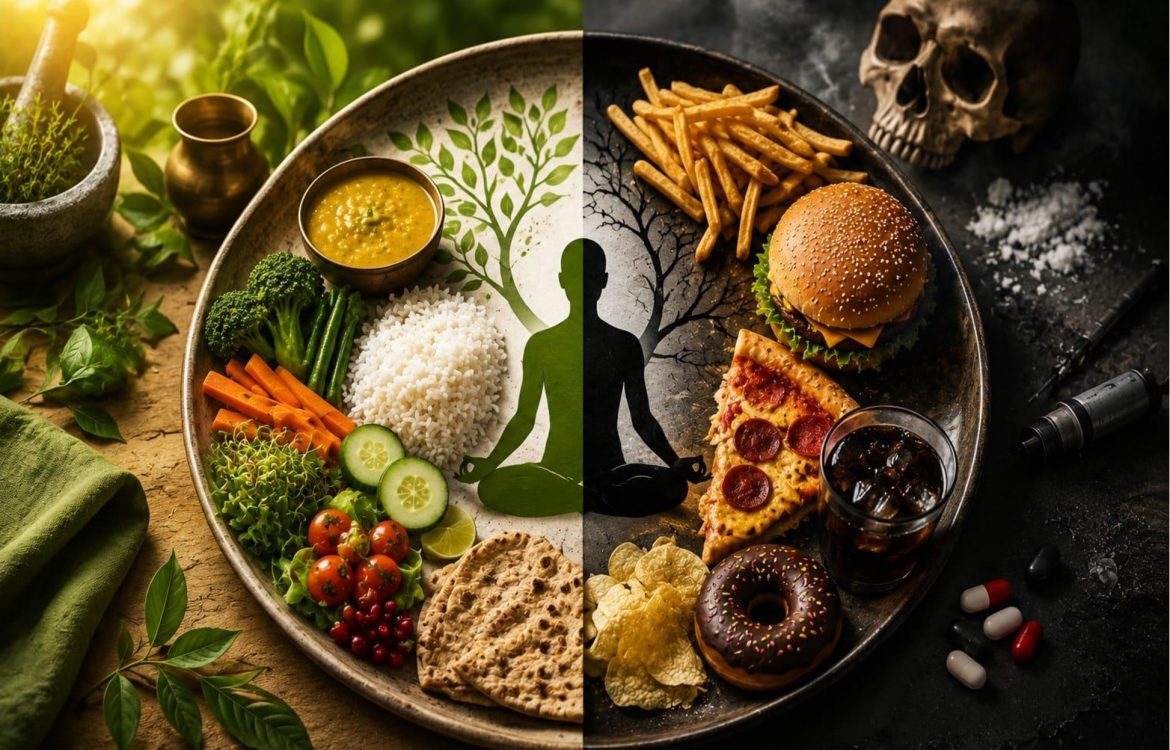
From Amrita to Visha: How Your Food Can Heal or Harm You – The Ayurvedic Wisdom of Healthy Eating
An Ayurvedic Guide to Healthy Eating
We often hear the saying, “You are what you eat.” But Ayurveda, India’s ancient system of medicine, takes this idea one step further. It teaches that it is not only what you eat that matters, but also how, when, and how much you eat. According to Ayurveda, the very same food can act as Amrita (nectar) that nourishes your body or Visha (poison) that slowly harms your health.
In today’s busy lifestyle, eating has often become something we do in a hurry. We skip meals, eat at irregular times, snack throughout the day, overeat, or depend heavily on processed foods. These habits may appear harmless at first, but over time they can disturb digestion and affect our overall health.
Food: Your First Medicine –
Ayurveda considers food (Ahara) one of the three pillars of a healthy life, along with good sleep and a balanced lifestyle. Fresh, wholesome food provides energy, builds strong tissues, supports immunity, and keeps both the body and mind healthy.
However, food is beneficial only when the body can digest it properly. Even the healthiest meal cannot nourish us if our digestive system is not working efficiently.
Meet Agni – Your Digestive Fire
One of the most important concepts in Ayurveda is Agni, or the digestive fire. Think of Agni as your body’s natural cooking system. It breaks down food, absorbs nutrients, produces energy, and removes waste.
When Agni is strong, food is converted into nourishment, leaving you feeling energetic and healthy.
But when Agni becomes weak due to unhealthy eating habits, food is not digested completely. Instead, it leaves behind a sticky toxic residue called Ama. Ayurveda considers Ama to be the root cause of many diseases because it gradually blocks the body’s normal functions.
When Healthy Food Becomes Harmful
Ayurveda explains a condition called Anna Visha, which literally means “food poison.” This doesn’t mean the food itself is contaminated. Instead, it refers to healthy food becoming harmful because it is eaten incorrectly or not digested properly.
Some everyday habits that can turn food into “slow poison” include:
- Eating another meal before the previous one is fully digested.
- Eating when you are not truly hungry.
- Overeating.
- Skipping meals and eating at irregular times.
- Constant snacking throughout the day.
- Eating a healthy meal followed by excessive junk food or sugary desserts.
Over time, these habits weaken digestion, increase Ama, and may contribute to chronic health problems.
The message is simple: sometimes it is not the food that is the problem – it is the way we eat it.
Food Combinations Matter Too
Ayurveda also speaks about Viruddha Ahara, or incompatible food combinations. Certain foods may be healthy individually but may not work well together.
Some traditional examples include:
- Fish with milk
- Heated honey
- Equal quantities of honey and ghee
- Heavy meals when digestion is weak
- Habitual overeating
Whether or not every traditional combination has been scientifically studied, the underlying message remains relevant: pay attention to how different foods affect your body instead of assuming that all combinations are equally beneficial.
The Hidden Danger of Modern Eating
Ayurveda also describes Garavisha, meaning a slow-acting poison that builds up over time through repeated exposure.
In today’s world, this idea closely resembles the frequent consumption of:
- Ultra-processed foods
- Sugary drinks
- Artificial colours and flavours
- Preservatives
- Reheated cooking oils
- Excess sugar and unhealthy fats
These foods may not make you sick immediately, but regular consumption can gradually affect digestion, metabolism, and overall health.
Modern research also shows that diets rich in highly processed foods are associated with obesity, diabetes, heart disease, fatty liver, and poor gut health. Although Ayurveda and modern medicine explain disease differently, both agree that healthy eating plays a major role in preventing lifestyle disorders.
Listen to Your Body
Poor digestion often gives warning signs long before serious illness develops. Some common symptoms include:
- Bloating or indigestion
- Loss of appetite
- Constipation
- Nausea
- Fatigue
- Headaches
- Unpleasant taste in the mouth
- General weakness
These signs are your body’s way of saying that your digestive system needs attention.
Healthy Eating Is Personal
One of Ayurveda’s greatest strengths is its emphasis on individuality. There is no single diet that suits everyone.
The ideal food for you depends on your age, body type (Prakriti), digestive strength, health condition, climate, and even the season. A food that is beneficial for one person may not suit another.
Instead of following popular diet trends, Ayurveda encourages us to understand our own bodies and choose foods that help us feel light, energetic, and healthy.
Simple Ayurvedic Tips for Everyday Life
Healthy eating doesn’t have to be complicated. Small daily habits can make a big difference.
- Eat freshly prepared meals whenever possible.
- Eat only when you feel genuine hunger.
- Avoid overeating.
- Follow regular meal timings.
- Eat slowly and chew your food well.
- Avoid using mobile phones or watching television while eating.
- Choose seasonal and locally available foods.
- Drink enough water throughout the day.
- Respect your digestion – it is the foundation of good health.
The journey from Amrita (nectar) to Visha (poison) is not determined by the food alone. It depends on our daily choices, eating habits, digestion, and lifestyle.
Ayurveda reminds us that health is built one meal at a time. Fresh, balanced food eaten in the right quantity, at the right time, and with mindful attention becomes nourishment for both body and mind.
In a world where lifestyle diseases are becoming increasingly common, this ancient wisdom remains surprisingly relevant. Healthy eating is not about expensive diets or strict food rules. It is about understanding your body’s needs, respecting your digestive system, and making thoughtful choices every day.
To finally conclude, food can be your greatest medicine – or your slowest poison. The choice is on your plate.
By –
Dr Soniya A Kamat
2nd year PG Scholar
Department of Agadatantra & Vidhi Vaidyaka